“Woodworm” isn’t a single insect — it’s the general name given to the larvae of several different wood-boring beetle species, and which one you’re dealing with genuinely changes what (if anything) needs to be done about it.
The common furniture beetle causes most of it
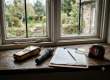
The common furniture beetle (Anobium punctatum) is responsible for the vast majority of woodworm damage in UK properties — estimates put it at around 80% of cases. It’s the beetle most people picture: small, dark, and often spotted on window sills during late spring and summer, as adults emerge from timber and fly towards the light before mating and starting the cycle again. The larval stage — the actual “woodworm” doing the damage — can last anywhere from two to five years, tunnelling through timber from the inside, which is exactly why an infestation is often invisible until it’s fairly advanced.
Other species turn up less often but matter when they do. The wood-boring weevil restricts itself to damp, partially decayed timber, commonly found behind skirting boards or wall plates where fungal decay is already present — meaning weevil activity is usually a sign of an underlying damp problem rather than a standalone timber issue. The deathwatch beetle prefers partially decayed hardwood, particularly oak, and turns up most often in older and historic buildings; its distinctive frass makes identification easier, but treatment can be more involved. Getting the species right matters, because treatment approaches genuinely differ between them.
How to tell if an infestation is active or historic
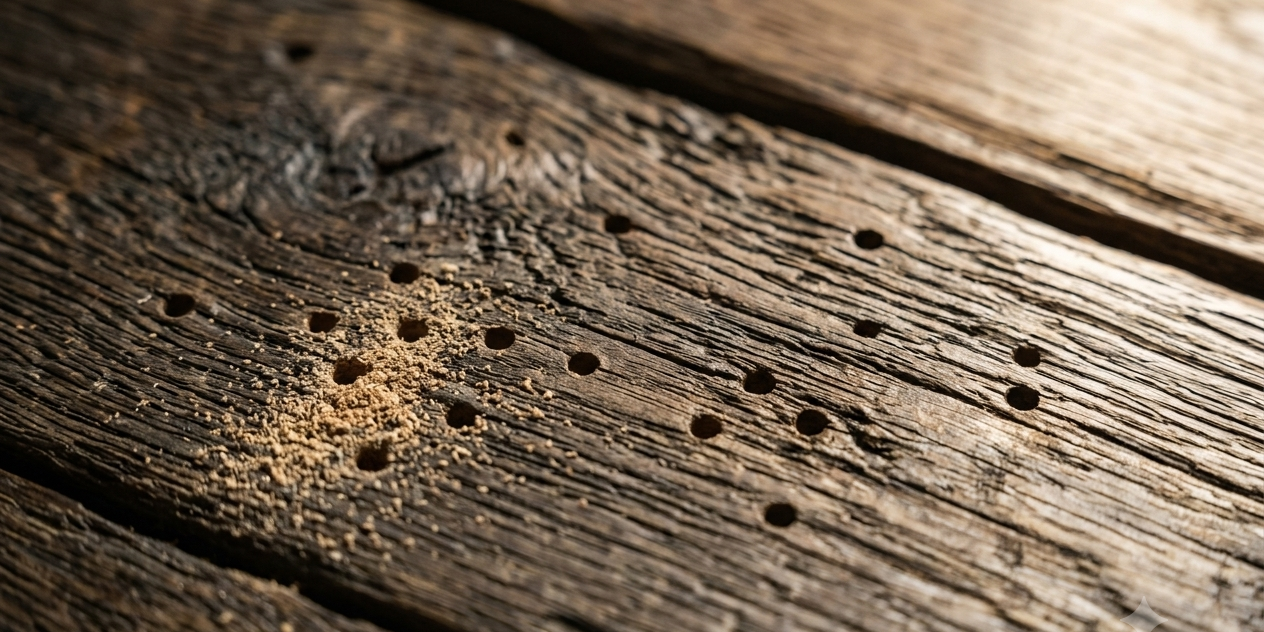
The tell-tale signs are exit holes (small, round holes where an adult beetle has emerged) and frass — fine, powdery bore dust that collects beneath or around the holes. Neither of these alone confirms an active infestation; both can be leftover evidence of a problem that was treated or died out years ago. The clearest sign of ongoing activity is fresh, pale-coloured frass, or actually spotting live beetles (commonly on windowsills) during the flight season, roughly April to September.
This distinction matters practically: professional guidance is consistent that chemical treatment shouldn’t be recommended where there’s no evidence of active infestation, or no genuinely justified preventive need. Treating timber that already has old, inactive exit holes achieves nothing except unnecessary cost.
What treatment actually involves
Since wood-boring insects need a certain level of moisture in timber to survive, addressing any underlying damp is usually as important as any direct chemical treatment — treating woodworm without fixing the moisture source that’s sustaining it tends not to solve the problem long-term. Where an infestation is confirmed as active, treatment typically targets the young larvae within the timber; because the beetle’s full lifecycle can run several years, it’s normal for a few more adult beetles to emerge even after treatment, as those already deep in the wood complete their cycle. In cases where structural timber strength has been genuinely compromised, the affected sections may need replacing with new, pre-treated timber rather than repaired in place.
What this means if you're buying a property
If a survey identifies woodworm, the useful questions are: which species, is it active or historic, and has it affected structural timber or purely non-structural elements like floorboards or joinery? A property with old, clearly inactive woodworm holes in a single floorboard is a very different situation to active infestation in a roof structure — and it’s exactly the kind of nuance a Building Survey is built to properly investigate, rather than simply flagging “woodworm present” and leaving you to guess how seriously to take it.